

KTM Duke 160: Pocket Rocket Or A Short-Fall?
- By Biplab Das
- August 28, 2025
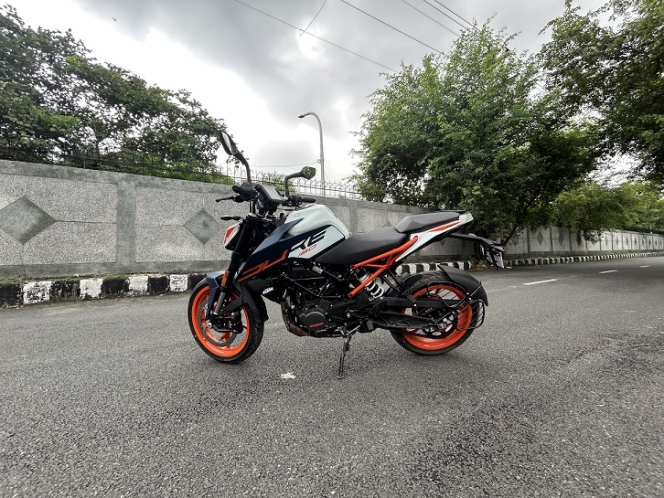
Thumb the starter on the KTM Duke 160 and the first impression is of familiarity – those tense lines, sculpted tank and sit-in stance that signal ‘Duke’ before the wheels even turn – yet there’s also a welcome lightness to how it picks up and changes direction at parking speeds and in the first hundred metres. That easy agility is backed by a chassis brief that reads serious on paper – trellis frame with bolt-on subframe, lighter five-spoke wheels, hollow axles and geometry that’s a shade sharper than the bigger siblings – so the bike feels eager without getting nervous when the pace rises.
Within a few blocks, two things set the tone for daily life: a clutch that’s genuinely light and progressive and a gearbox that slips through ratios cleanly, letting short, tidy shifts replace the usual 160cc thrash – helped by a slipper clutch that takes the drama out of hurried downshifts when traffic opens and closes without warning.
What stands out
The Duke 160 looks and feels like a proper Duke – tense lines, sculpted tank, sit-in stance – and backs it up with a genuinely light and eager front end thanks to the trellis frame, lighter five-spoke wheels and sharper geometry. The motor’s real-world strength is tractability and in-gear urge rather than fireworks off the line; timed roll-ons of 30–70 kmph in 6.8s (4th) and 9.1s (5th) make short overtakes easy without constant downshifts, echoing the sentiment that it feels brisk between gaps more than it feels explosive from a standstill.
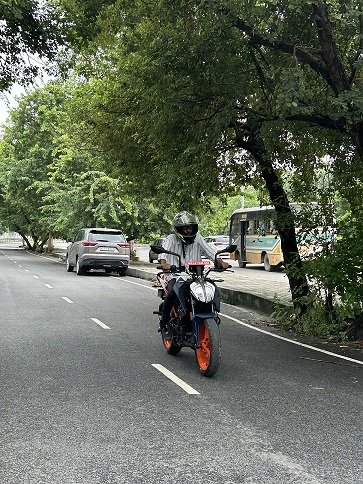 Braking hardware is a headline win: a 320mm front disc with braided lines and dual-channel ABS (rear channel switchable) gives bite and progression few 160s can match and it shows when hustling or panic-stopping in town.
The everyday reality
At 815mm, the seat is on the taller side for an average-height rider; those around 5ft 8in may tip-toe at awkward cambers, though the wide bar and neutral pegs help low-speed balance and leverage in traffic. The clutch and gearbox pairing is excellent – light, smooth and confidence-inspiring – so creeping traffic and quick, clean shifts become second nature within minutes of riding. Lever placement is not perfect from the crate; both the gear and brake pedals could use a quick adjustment during PDI to better match different boot sizes and ankle angles, which takes the edge off initial niggles.
Ride and features
Suspension tuning leans towards control with acceptable compliance: the Duke stays planted and keen to turn, yet retains enough travel to keep sharp edges from jarring too much in the city, though rougher patches still remind that it’s set up to feel taut rather than plush. Thermal management is a positive: a larger radiator surface area helps in slow-moving traffic and while the fan cycles in dense conditions, heat never tips into discomfort during typical urban use in this test window. The monochrome LCD with a dot-matrix pane is clear in bright light, offers all the basics at a glance and the microswitch cubes feel a cut above the class; Bluetooth navigation remains an accessory, which keeps base weight and price in check.
Verdict
Against the Yamaha MT-15 V2, the Duke 160 trades efficiency for feel: the Yamaha is lighter and significantly more frugal (users often report 50+ km/l), while the KTM bites harder on the brakes, feels more planted at the front and pulls stronger in mid-gear bursts on paper and in practice. The KTM’s 19PS and 15.5Nm edge the Yamaha’s 18.4PS and 14.1Nm and its 320mm rotor dwarfs the MT’s 282mm, but the MT-15 counters with lower kerb weight and everyday economy advantages that matter to commuters. If weekly highway runs and traffic sprints define the brief, the Duke’s chassis feedback, brake feel and roll-on pace make a compelling case; if fuel economy and a lower seat are top priorities, the MT-15 remains the pragmatic pick and price positioning in on-road terms still favours the Yamaha in many cities.
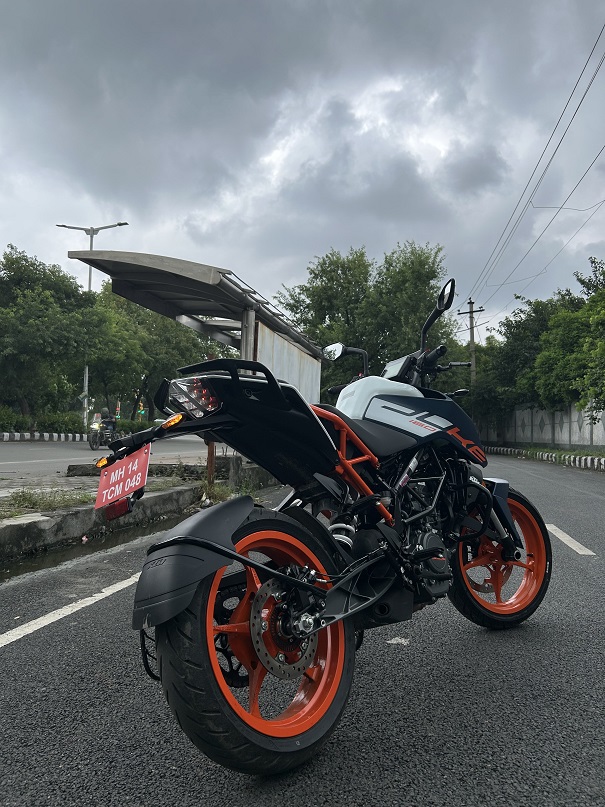
In short, the Duke 160 is not the outright quickest feeling 160 off the mark, nor the most frugal, but it is the most ‘KTM’ in the way that matters: front-end feel, braking confidence and mid-gear urge that make real-world riding more engaging and assured than the spec sheet alone suggests. It could do with lower seat options from the factory and cleaner lever ergonomics out of the box; sort those and it becomes an easy recommendation for riders who value control and character over kilometre-per-litre bragging rights.
Honda Motorcycle & Scooter India Launches XR300 L A And XR300 Rally Motorcycles At INR 183,000
- By MT Bureau
- October 07, 2026
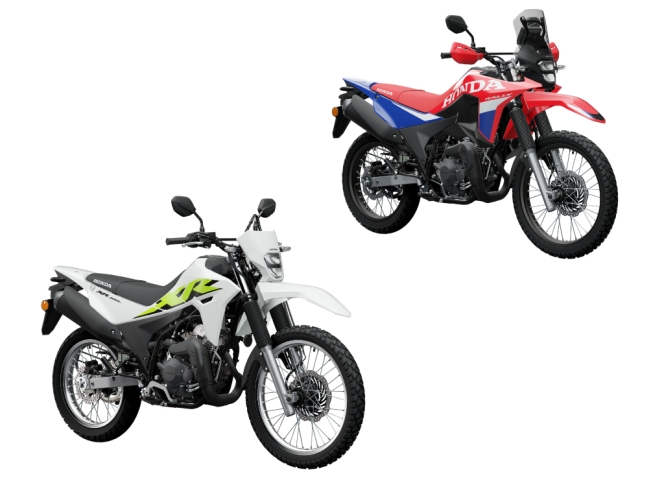
Honda Motorcycle & Scooter India, one of the leading two-wheeler manufacturers in the country, has announced pricing and opened bookings for the Honda XR300 L and Honda XR300 Rally. The announcement follows the initial unveiling of both models in July 2026 as part of the company's product expansion plans.
The XR300 L is priced at INR 183,000 ex-showroom Bengaluru, while the XR300 Rally is priced at INR 208,000 ex-showroom Bengaluru. Effective from 5 October 2026, bookings for both models have opened across the manufacturer's BigWing dealership network and online platform for a reservation amount of INR 5,000.
Both motorcycles are powered by a 293.5cc air-cooled engine equipped with an oil cooler; both variants come with torque control systems, rear suspension setups, front and rear disc brakes, switchable dual-channel ABS and an assist slipper clutch.
The XR300 L is designed for mixed city and off-road use and is offered in Extreme Red and Shasta White colour options. The XR300 Rally features bodywork designed for wind protection during long-distance riding, along with a TFT instrument cluster with smartphone connectivity.
The Rally variant is available in Extreme Red and True Black options. Both models form part of the manufacturer's domestic production initiative for local and export markets.
Triumph Motorcycles Introduces Bonneville T40, T40 Black And T4 Models In India
- By MT Bureau
- October 06, 2026
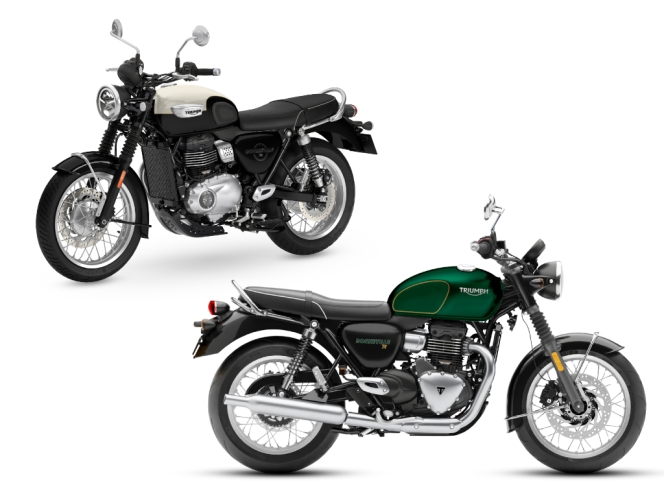
Triumph Motorcycles, one of the leading premium motorcycle manufacturers, has expanded its lineup in India with the launch of the Bonneville T40, T40 Black and T4 models, with pricing starting at INR 279,999 ex-showroom, Delhi, while the latter is priced at INR 254,999 ex-showroom, Delhi.
The new models feature traditional styling elements, including a teardrop fuel tank, round headlight, twin rear shock absorbers and spoked wheels with aluminium rims. The motorcycles are available in two-tone schemes with hand-painted coach lining and peashooter silencers. The bikes offer an accessible ergonomic setup, featuring a low seat height that can be reduced to 770 millimetres with an accessory seat.
All three variants are powered by a 350cc iteration of Triumph's TR Series engine. The engine produces 29 PS of power at 7,000 rpm and 31 Nm of torque at 5,500 rpm, tuned to deliver low-end torque and a distinct exhaust note.
The T40 and T40 Black feature a four-inch circular TFT instrument display with smartphone connectivity, including map navigation, phone and music controls. The models also come equipped with five ride modes, cruise control, cornering ABS and cornering traction control. The Bonneville T4 includes a colour LCD with turn-by-turn navigation, selectable ride modes, and dual-channel ABS.
Steve Sargent, Chief Product Officer, Triumph Motorcycles, said, “The Bonneville is one of the most significant motorcycles in Triumph's history, so introducing a new model carrying that name comes with a responsibility to get it right. From the outset, our ambition was not simply to create a smaller Bonneville, but to create a motorcycle that delivers the style, character and ownership experience riders expect from a genuine Bonneville. Bringing that experience to more riders is strategically important for Triumph, particularly as lower-capacity motorcycle categories continue to grow around the world."
"Working closely with Bajaj, we challenged ourselves to retain the details and qualities that make a Bonneville special, from the proportions and finish to traditional touches such as hand-painted coach lining, while also introducing a level of technology and rider-focused innovation not previously seen in this category. The result is a motorcycle that stays true to the values that have defined the Bonneville for generations while opening the experience to even more riders.” Sargent added.
The company has begun online bookings for the motorcycles starting 7 October 2026. Deliveries for the Bonneville T40 and T40 Black are scheduled to begin in the second week of November 2026, while deliveries for the Bonneville T4 will commence in the second week of January 2027.
Aprilia India Introduces SXR GT Scooter Lineup Starting At INR 109,999
- By MT Bureau
- October 06, 2026
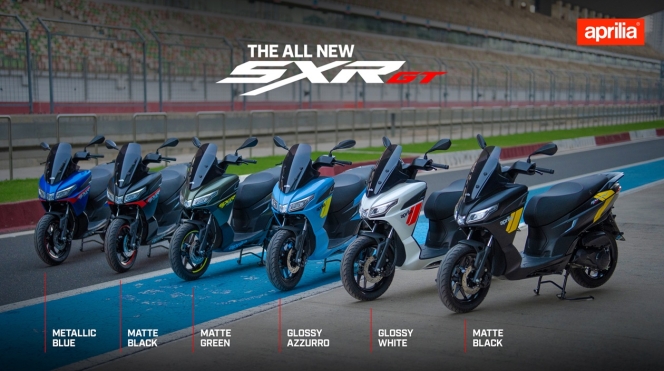
Aprilia India has launched its SXR GT scooter lineup, introducing the SXR GT 125 hp-e and SXR GT 175 hp-e models to expand its product offerings in the country. The SXR GT 125 hp-e is priced at an introductory rate of INR 109,999 ex-showroom, Maharashtra, while the SXR GT 175 hp-e is priced at INR 129,999 ex-showroom, Maharashtra.
The scooters are powered by air-cooled single-cylinder engines. The 124.45 cc engine produces 7.8 kW of power at 7,400 rpm and 10.4 Nm of torque at 6,200 rpm, while the 174.7 cc engine delivers 9.76 kW at 7,200 rpm and 14.14 Nm of torque at 6,000 rpm.
Both scooters feature three valves per cylinder, electronic fuel injection, electric starting, and compliance with BSVI OBD II Stage B regulations and E20 fuel blends. The chassis setup incorporates 14-inch wheels fitted to both models.
Suspension is handled by telescopic front forks and a dual-effect hydraulic shock absorber with five-position adjustability at the rear. Braking relies on a 220 mm front disc brake paired with a 140 mm rear drum brake, with the 125 cc variant utilising a combined braking system and the 175 cc variant employing an anti-lock braking system.
The SXR GT 125 hp-e is available in Matte Black, Glossy Azzurro, and Glossy White colour finishes, while the SXR GT 175 hp-e comes in Metallic Blue, Matte Black and Matte Green. Both models have gone on sale across Aprilia dealerships in India.
- Royal Enfield
- Madhya Pradesh Tourism Board
- MPTB
- Dr Ilayaraja T.
- Dileep Kumar Yadav
- Amitabh Pandey
- Indira Gandhi Rashtriya Manav Sangrahalaya
- IGRMS
Royal Enfield And Madhya Pradesh Tourism Board Partner To Promote Responsible Motorcycling
- By MT Bureau
- October 03, 2026
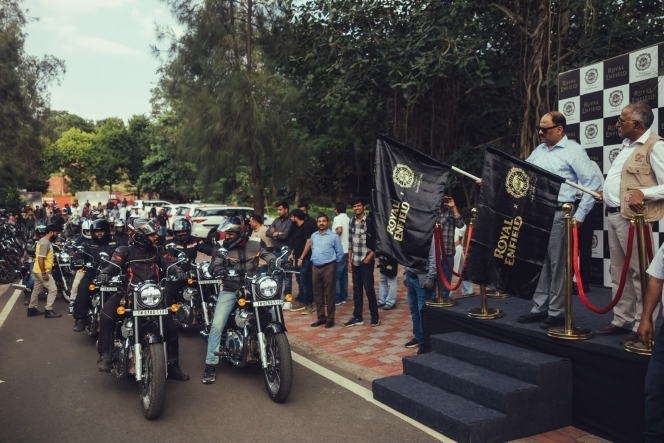
Royal Enfield and the Madhya Pradesh Tourism Board (MPTB) have commenced a two-year partnership spanning 2026 to 2028 aimed at promoting responsible riding, travel and cultural tourism across the state.
The collaboration was initiated with the flag-off of a flagship motorcycle expedition in Bhopal, attended by Dr Ilayaraja T., Secretary of Tourism for the Government of Madhya Pradesh and Managing Director of the MPTB; Dileep Kumar Yadav, Managing Director of the Madhya Pradesh State Tourism Development Corporation (MPSTDC) and Amitabh Pandey, Director of the Indira Gandhi Rashtriya Manav Sangrahalaya (IGRMS).
The inaugural 1,520-kilometre expedition, taking place from 1 to 10 October 2026, involves 20 participants riding the Bullet 650 motorcycle. The route connects wildlife reserves, heritage sites and regional highways, covering Bhopal, Pachmarhi, Pench, Kanha, Bandhavgarh, Panna and returning to Bhopal. A closing event scheduled for 9 October 2026 in Bhopal will mark the completion of the ride.
Over the two-year agreement period, Royal Enfield and the MPTB plan to expand the initiative to include heritage rides, off-road trail explorations and curated motorcycling routes across Madhya Pradesh.
Comments (0)
ADD COMMENT