

- Tata AutoComp Systems
- International Automotive Components Group Sweden
- IAC Sweden
- Artifex Systems
- Arvind Goel
- Manoj Kolhatkar
- Anders Ericson
- Anurag Bhushan
- Jan Thesleff
- Sven Ostberg
Tata AutoComp Completes Acquisition Of IAC Sweden, Rebrands Entity As Artifex Systems
- By MT Bureau
- December 02, 2025
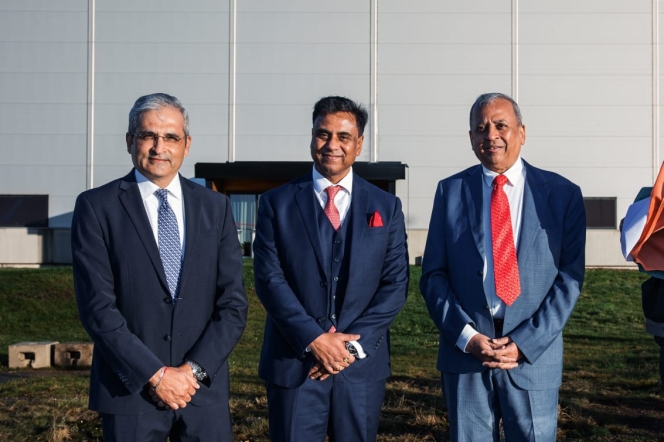
Tier 1 automotive supplier Tata AutoComp Systems has completed the acquisition of the assets of International Automotive Components Group Sweden (IAC Sweden), a European automotive component manufacturer specialising in interior and exterior systems. IAC Sweden has an annual turnover of approximately USD 800 million.
Under the Tata AutoComp Systems Group, the entity will operate as Artifex Systems.
This acquisition will strengthen Tata AutoComp’s presence in Europe and enhance its partnerships with key European OEMs across passenger and commercial vehicle segments. The integration combines design, engineering and system-level capabilities with manufacturing, precision painting and assembly expertise in the automotive space.
Arvind Goel, Vice-Chairman, Tata AutoComp Systems, said, “We are delighted to welcome IAC Sweden, now Artifex Systems AB, into the Tata AutoComp family. This transaction aligns with our long-term vision of strengthening our global presence and deepening our relationships with European OEMs. They have a rich legacy of delivering high-quality interior & exterior solutions, and together, we aim to build on that foundation. We have a well-defined plan to strengthen the Artifex brand by bringing together Artifex Systems AB, Artifex Slovakia, and Artifex Interior Systems under one cohesive and unified identity.”
Manoj Kolhatkar, MD & CEO, Tata AutoComp Systems, stated, “IAC Sweden, now Artifex Systems AB brings with it advanced manufacturing capabilities and a highly skilled workforce with deep expertise in automotive interior & exterior systems. Their strong commitment to quality complements Tata AutoComp’s focus on delivering value to global customers. We look forward to leveraging these strengths to enhance our competitiveness and expand our global footprint.”
Anders Ericson, Vice-President – Operations, Artifex Systems, said, "We are excited to begin this new chapter as part of the Tata AutoComp family, opening new opportunities for growth and collaboration. This marks a new phase of progress, bringing possibilities to strengthen our capabilities, expand our reach, and contribute to Tata AutoComp’s global vision."
Ambassador of India to Sweden, Anurag Bhushan, added, "I am pleased to see IAC Sweden, now Artifex Systems AB, becoming part of Tata AutoComp. I am confident that under Tata AutoComp, Artifex Systems will evolve and grow, driving economic growth in the region. This acquisition is also a reflection of the potentialities for collaboration between India and Sweden."
Jan Thesleff, Ambassador of Sweden to India, said, “The revitalisation of IAC Sweden (now Artifex Systems AB) by Tata AutoComp will ensure continuity for Swedish customers, safeguard employment, and strengthen manufacturing capability. We recognise the long-standing and strategic engagement of Tata AutoComp, a reputed company within the esteemed Tata Group, within Sweden’s industrial landscape. We welcome this development and value Tata AutoComp’s continued partnership in supporting the stability and growth of Sweden’s automotive ecosystem.”
Sven Ostberg, Consul General of Sweden in Mumbai, also added: “We are happy that IAC Sweden (now Artifex Systems AB) is now part of the Tata AutoComp Group. This development will help ensure the smooth functioning of the three plants, provide continued support for Swedish customers, and maintain continuity of employment, while further strengthening the resilience of Sweden’s automotive component ecosystem.”
- Highway Roop Precision Technologies
- Carlyle
- Chamundi Die Cast
- Mohit Oswal
- Dharmesh Arora
- Yasin Khan
- Amit Jain
- Carlyle India Advisors
Highway Roop Precision Technologies Acquires Chamundi Die Cast
- By MT Bureau
- September 29, 2026
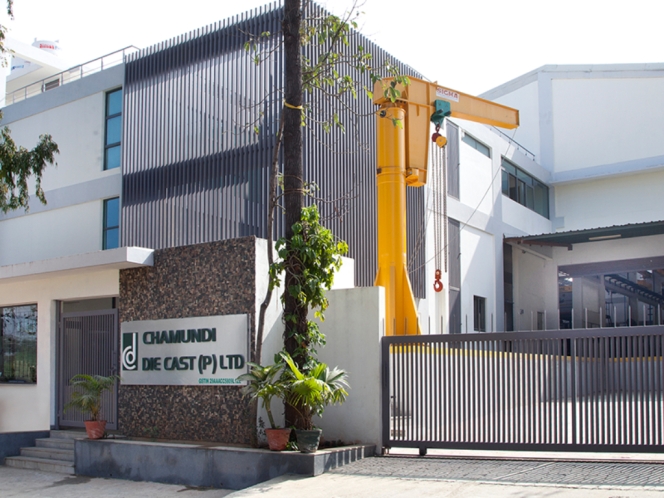
Highway Roop Precision Technologies, a Carlyle-backed manufacturer of precision torque and control components, has completed the acquisition of Chamundi Die Cast, which manufactures complex aluminium die-cast components for automotive and industrial applications.
The transaction adds integrated aluminium die-casting and machining capabilities to Highway Roop's existing forging and precision-machining operations across steering, transmission and powertrain systems.
The acquisition expands Highway Roop’s product portfolio into lightweight vehicle solutions and electric vehicle components, while establishing a manufacturing footprint in South India alongside Chamundi's existing customer base in India, North America and Europe.
At present, Chamundi exports 60 percent of its products to global markets, while domestic business accounts for 40 percent. Interestingly, 98 percent of its business comes from the automotive industry, while the remaining comes from non-automotive sector.
Mohit Oswal, Chairman, Highway Roop, said, “This acquisition is an important milestone in our journey to build Highway Roop into a scaled, diversified precision manufacturing platform anchored in mission-critical torque and control applications. Chamundi’s capabilities and customer relationships complement our existing strengths and strengthen our ability to serve customers across automotive and industrial applications. Together, we are building a stronger platform for the next phase of growth.”
Dharmesh Arora, Group CEO and Director, Highway Roop, said, “Chamundi meaningfully strengthens Highway Roop’s capabilities around our core focus on torque and control applications. Its integrated aluminum die-casting and precision-machining capabilities expand our ability to deliver complex, lightweight engineered solutions across vehicle technologies. Its South India manufacturing base also diversifies our footprint, brings us closer to key customers, and strengthens the resilience of our manufacturing network and supply chain. We are delighted to welcome the Chamundi team to Highway Roop and look forward to building a stronger platform together.”
Yasin Khan, Managing Director, Chamundi, said, “Over four decades, Chamundi has built a strong business anchored in engineering excellence, a committed workforce and long-standing customer relationships. We are pleased to partner with Highway Roop for the next phase of our journey and will continue to hold a stake in the combined entity. Highway Roop’s complementary capabilities and scale will enable us to build on this foundation, deepen our relationships with customers, and create new opportunities for our employees, as we grow together.”
Amit Jain, Partner and Head, Carlyle India Advisors, said, “This transaction reflects Carlyle’s continued commitment to building a scaled, differentiated precision manufacturing platform in India. Highway Roop has established itself as a trusted partner to global OEMs for mission-critical torque and control components, and Chamundi adds complementary capabilities that further strengthen its customer proposition. We remain focused on supporting Highway Roop as it scales its capabilities and builds towards becoming one of India’s leading precision manufacturing companies serving automotive and industrial customers globally.”
Following the completion of the acquisition, Chamundi's leadership will retain an equity stake in the combined entity as part of the integration into Highway Roop's global supply platform.
- Stoneridge
- Uwe Brandeburg
- Natalia Noblet
- Valeo
- DXC Technology
- Continental
- Autoliv
- TRW Automotive
- BlincVision
Stoneridge Appoints Uwe Brandenburg As Global VP Of Engineering & Innovation
- By MT Bureau
- September 25, 2026

American component supplier Stoneridge has appointed Uwe Brandenburg as its Global Vice-President, Engineering and Innovation, effective 2 November 2026. Brandenburg will report to President and Chief Executive Officer Natalia Noblet and join the company’s executive management team.
In his new role, Brandenburg will oversee Stoneridge’s global engineering division, managing product development, technology innovation and product roadmaps across vision systems, safety technology, vehicle intelligence and connectivity platforms for commercial vehicles and off-highway equipment.
Natalia Noblet said, "Uwe is a recognised voice in automotive electronics and engineering leadership, with a proven track record of building world-class engineering teams and delivering breakthrough innovations in ADAS, autonomous driving and software-defined vehicles. His extensive experience bringing next-generation radar, camera, safety electronics and AI-powered platforms to market, combined with his strategic vision and commitment to operational excellence, make him an exceptional addition to our Executive Team. We are excited to leverage his expertise to accelerate Stoneridge’s technology roadmap and strengthen our competitive position in vehicle intelligence and safety.”
Brandenburg comes with over 25 years of experience in Tier 1 automotive electronics, software engineering and vehicle systems. Prior to joining Stoneridge, he served as Chief Technology Officer and Senior Vice-President for Automotive and Manufacturing at DXC Technology.
His previous positions include Global Head of Engineering and Chief Technology Officer for advanced driver assistance systems at Valeo, alongside engineering leadership roles at Continental, Autoliv and TRW Automotive focused on radar, camera and safety electronics systems.
Uwe Brandenburg said, “Stoneridge has a clear technology strategy, a highly talented engineering organisation, and a mission centred on improving safety, reducing emissions and increasing vehicle efficiency for our customers. When cutting-edge technology is paired with the right team and a purpose that truly matters, we have what it takes to create strong value for our customers. I look forward to building on this strong foundation and helping the team deliver the next generation of vision and safety solutions.”
Brandenburg holds a degree in Electrical and Telecommunications Engineering from the University of Applied Sciences Constance and currently serves on the board of directors of BlincVision.
HS HYOSUNG ADVANCED MATERIALS To Exhibit At CAMX 2026 In Atlanta
- By MT Bureau
- September 23, 2026
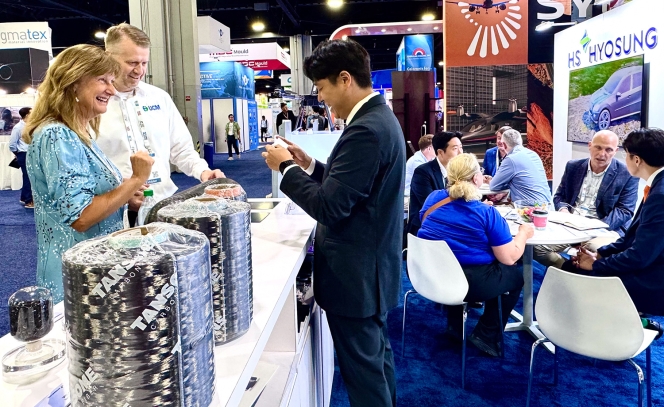
HS HYOSUNG ADVANCED MATERIALS will participate in CAMX 2026, the Composites and Advanced Materials Expo, held in Atlanta from 22 to 24 September. As North America's largest exhibition for composite and advanced materials, it expects over 500 companies and roughly 7,000 visitors. The company has exhibited every year since the event's debut in 2014, strengthening its North American presence.
At this year's show, HS HYOSUNG ADVANCED MATERIALS will display 3K carbon fibre, 3K fabrics and composites for drones and high-pressure vessels for satellites. Carbon fibre applications are expanding across automotive wheels, hoods and brake discs, sports goods such as hockey sticks, pickleball rackets and surfboards, wire cores and increasingly aerospace, defence and drones.
TANSOME, independently developed in 2011 as Korea's first proprietary carbon fibre, weighs one-quarter as much as steel while offering ten times the strength and seven times the elasticity. Commercial production began in Jeonju in 2013, followed by a China base in 2024 and planned Vietnam operations in late 2026, ensuring a stable global supply chain.
International certifications validate the company's capabilities, including IATF 16949 in 2019 and AS9100 in 2021. In 2022, it developed H3065, a T-1000-grade ultra-high-strength carbon fibre, becoming only the third company worldwide after Japan and the United States to do so.
Jin-dal Lim, CEO, HS HYOSUNG ADVANCED MATERIALS, said, “CAMX 2026 is an important platform for sharing the latest technologies and market trends with leading companies and customers in the global composite materials industry and exploring new business opportunities. We will provide differentiated carbon fibre solutions for advanced industries, including aerospace and aviation, based on our high-performance carbon fibre technologies and stable supply capabilities.”
Imperial Auto USA Corp Appoints James Gaylord As MD & CEO
- By MT Bureau
- September 17, 2026
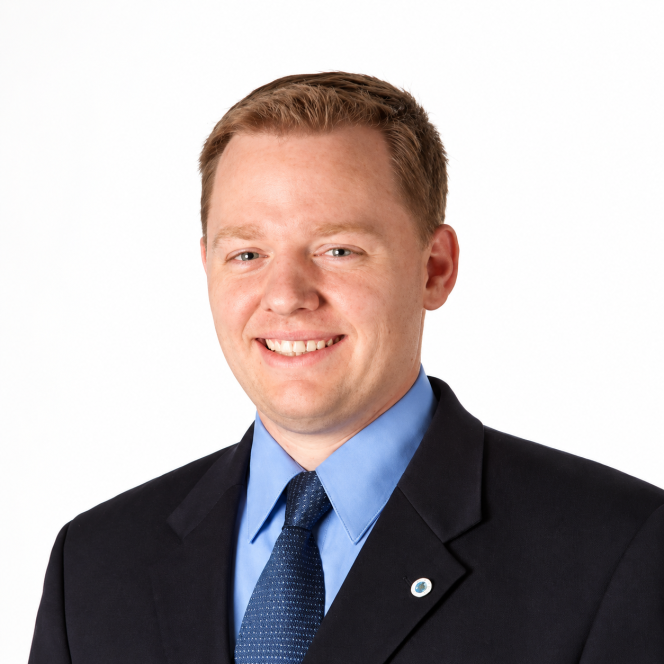
Imperial Auto Industries Limited has appointed James Gaylord as Managing Director & Chief Executive Officer of its subsidiary, Imperial Auto USA Corp. In his new role, Gaylord will lead Imperial Auto’s operations across the Americas and drive the company’s next phase of growth in the region. He will report to Vikram Wagh, Managing Director & CEO, Imperial Auto Industries Limited.
Gaylord's mandate would include expanding Imperial Auto’s presence into new markets across the American region while driving significant revenue growth over the coming years. He will also focus on strengthening the company’s product engineering and new product development capabilities in the Americas, while leading initiatives to localise the supply chain, enhance purchasing capabilities and build strategic partnerships with suppliers to support the company’s regional growth.
With nearly three decades of experience across the automotive and manufacturing sectors, Gaylord brings with him proven expertise in business development, operational excellence, transformation and growth. Prior to joining Imperial Auto, he served as the Global Sales Director at Gentex. He has also held leadership roles at organisations including Johnson Controls, ATI and Tenneco.
Comments (0)
ADD COMMENT