

BillionE Mobility Secures USD 25 Million To Expand Electric Trucking Fleet
- By MT Bureau
- January 13, 2026
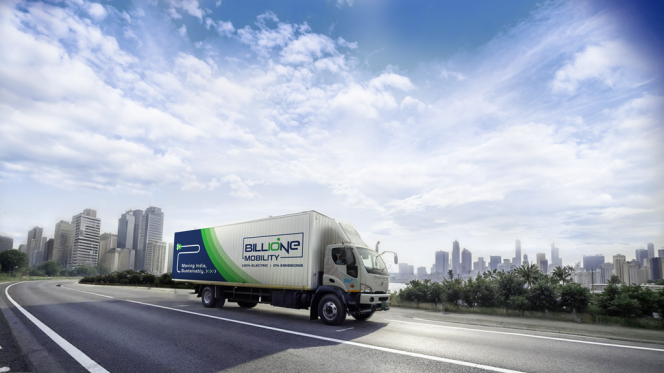
BillionElectric Mobility (BillionE) has raised USD 25 million in a growth capital round consisting of equity and debt. The funding was provided by a consortium of family offices, ultra-high-net-worth individuals and financial institutions, including the State Bank of India (SBI).
The capital is intended to transition the company from deployments to commercial operations in electric freight. A portion of the funds will support the rollout of 500 electric trucks during the FY2026-27.
BillionE Mobility currently maintains a pipeline of over 1,500 electric trucks planned for the next three years to meet demand from industrial customers.
The fleet will serve logistics for sectors including cement, automotive, metals, and e-commerce. These industries are targeted due to predictable routes and high utilisation levels, which facilitate the transition to electric vehicles.
BillionE Mobility is executing a strategy across freight corridors. These routes are being electrified by CHARGE ZONE, an affiliated company providing the charging network for the fleet. The integration aims to deliver operational efficiencies and reductions in emissions across industrial clusters.
Sanjeev Kulkarni, CEO and Co-Founder, BillionE Mobility, said, “This fundraise comes at a defining moment for electric commercial mobility in India. We are moving beyond pilots to scaled, real-world deployments where execution, reliability, and economics matter most. The capital will allow us to accelerate fleet expansion, strengthen operational readiness, and deepen partnerships with customers committed to decarbonising their logistics. Our vision is to make electric trucking a mainstream, dependable, and commercially viable choice for India’s freight ecosystem.”
Kartikey Hariyani, Founder and Chief Platform Architect of BillionE Platform, added, “I am personally indebted and grateful to our existing and new shareholders backing our vision of an Energy Transition platform enabled by electric mobility in commercial segments. Currently we are on a growth path of 120 percent on YoY basis and would like to maintain this momentum in coming months and years. Fortunately, EV trucking has achieved the total cost of ownership (TCO) at par with diesel on specific routes and use cases, especially 19T and 55T category, and this is indeed a huge boost.”
The company intends to use the investment to capture a share of the commercial vehicle market while lowering carbon intensity in freight logistics.
Ashok Leyland Ties Up With Kerala Grameena Bank For End-To-End Vehicle Financing
- By MT Bureau
- September 18, 2026
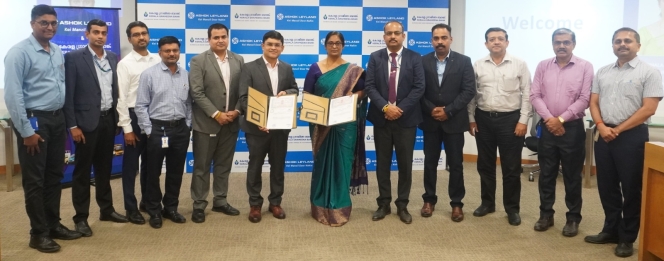
Ashok Leyland, the Hinduja Group’s Indian flagship and a leading commercial vehicle manufacturer, has entered a strategic vehicle financing partnership with Kerala Grameena Bank through a signed Memorandum of Understanding. The agreement is designed to provide customers purchasing Ashok Leyland vehicles with customised and convenient financing solutions.
The MoU was formalised by Viplav Shah, Head of LCV Business at Ashok Leyland, and Gundekar Harish Gangadhar Rao, General Manager of Kerala Grameena Bank. Vimala Vijayabhaskar, Chairperson of Kerala Grameena Bank, was present during the signing.
Under the partnership, Kerala Grameena Bank will deliver end-to-end financial solutions to Ashok Leyland customers. The collaboration seeks to improve customer convenience through vehicle loans featuring flexible and easy-to-manage repayment options tailored to individual needs and preferences.
Shah said, “Ashok Leyland is delighted to partner with Kerala Grameena Bank to provide our customers with attractive, accessible and customised financing solutions. This strategic partnership will further enhance the accessibility of our innovative range of commercial vehicles, enabling businesses and fleet operators to invest with greater confidence and financial flexibility. Powered by cutting-edge technology and engineered to deliver industry-leading total cost of ownership, our vehicles are designed to enhance customer productivity and profitability. Together with Kerala Grameena Bank, we look forward to creating greater value for our customers and supporting their growth journeys.”
Vijayabhaskar said, “Kerala Grameena Bank is pleased to partner with Ashok Leyland to offer seamless vehicle financing solutions. This association reflects our dedication to serving the diverse financial needs of commercial vehicle customers. We are confident that this collaboration will enable us to extend our reach and provide tailored financing options to support the growth of businesses in the commercial vehicle segment in the state of Kerala.”
Scania Expands Its Portfolio In India With The G 560 Super 10x4 Mining Tipper
- By MT Bureau
- September 16, 2026
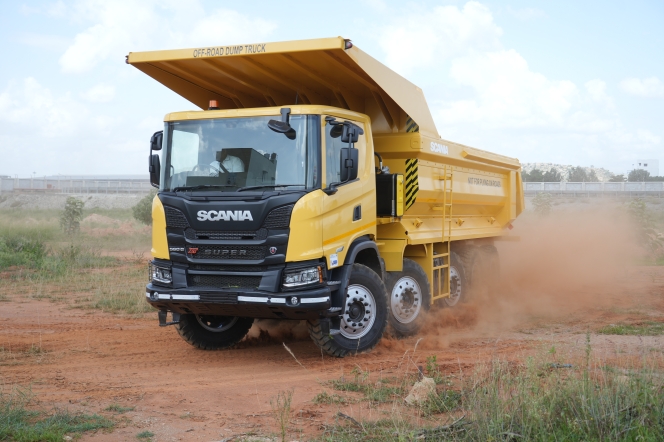
Scania Commercial Vehicles India unveiled the new G 560 Super 10x4 Mining Tipper at Bauma Conexpo India 2026. It marks the expansion of the Swedish truck maker's Super range of heavy-duty trucks. Combining power, robustness and reliability to perform in challenging environments such as mining and other off-highway applications, the G 560 Super is powered by a 560 hp 13-litre engine that produces 2,800 Nm of peak torque to support superior fuel efficiency and lower CO₂ emissions. Paired with the engine is the Scania’s G33 Opticruise gearbox.
The 10x4 axle configuration features three steerable axles and heavy-duty rear axles, providing the strength and capability required for challenging operations. With a 32.5 cu. m SAE heap volume and a technical gross vehicle weight of 71 tonnes, the G 560 Super is designed to support high-volume material movement and has a robust chassis at its core. The durable Hardox 450 steel rock body is capable of withstanding the rigours of demanding mining operations. The spacious G Series cab, smart displays and real-time vehicle monitoring enhance driver comfort, safety and ease of operation.
“The Super is already an important part of our offering in India, and with the reveal of the G 560 Super 10x4, we are taking the next step by bringing more products with Super power to our customers. Our focus is on bringing the right technology for the right application and, importantly, providing our customers with a complete solution that delivers value beyond the vehicle itself," said Silvio Munhoz, Managing Director, Scania Commercial Vehicles India Pvt. Ltd.
The G 560 Super 10x4 is already at some customers of Scania in India undergoing 'seeding' Once that is complete and the customers get an experience of its capabilities in real-world mining operations, it will be made commercially available.
Sany India Unveils 31 Machines And 13 New Launches at Bauma Conexpo India 2026
- By MT Bureau
- September 16, 2026
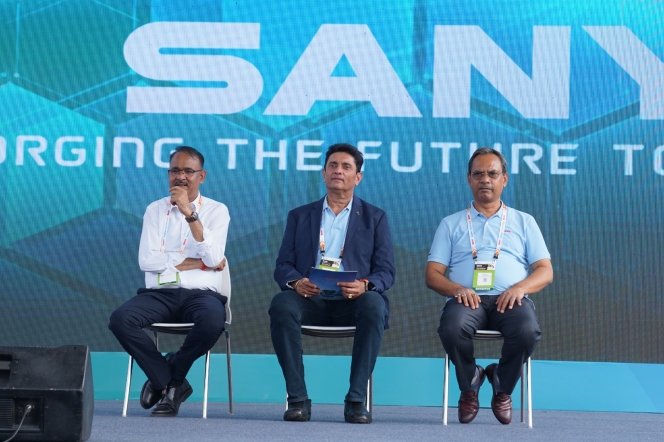
Sany India showcased 31 machines at Bauma Conexpo India 2026. Among these were 13 new product launches across its business units under the theme, 'Forging the Future Together'. Highlighting a diverse portfolio that consists of excavation, deep foundation, road construction, mining, port machinery, aerial work platforms, material handling and heavy-duty transportation, the company drew attention to its focus on technology development; on electrification in the heavy machinery space; sustainability and application-led engineering.
A good number of exhibits pointed at the shift towards electric powertrains. The electric excavators, for example. The wheel loaders to electric mining trucks, mining tippers, reach stackers, aerial platforms and heavy-duty vehicles, for example.
Interesting were the SY215C-9LC Quarry, SY210C-9 Quarry and SY215E electric excavators that will be launched soon in the Indian market. The others were the SW936E and SW956E electric wheel loaders; the STR90C-10 PRO and SSR110C-10 PRO soil compactors; the SRSC45E3 electric reach stacker; the SCP350C2 diesel heavy-duty forklift, the SPT42 42-metre telescopic boom lift, SPS1414HA electric Scissor lift and SPT26AC electric telescopic boom lift; the SCP30 3-ton forklift, and the 5565E electric tractor as well as the 3555E electric tipper with a 462-kWh battery configuration.
“India’s journey towards Viksit Bharat is creating tremendous opportunities for the construction and infrastructure equipment industry. At SANY, we see ourselves as a catalyst in this journey by bringing together technology, local capabilities and solutions that respond to the evolving needs of our customers. Our 31-machine showcase, including 13 new launches, reflects this commitment." "The growing presence of electric equipment across our portfolio demonstrates our belief that productivity and sustainability must move forward together," said Deepak Garg, Vice Chairman & Managing Director, Sany India
With a comprehensive manufacturing facility at Chakan (Pune), the company has invested in local capabilities for a 'made in India for the world' approach. Developing solutions that address Indian operating conditions while contributing to global requirements, Sany India is working on a localisation-led approach.
DICV Reinforces India's Strategic Role In Daimler Truck, Unveils BharatBenz Growth Plans
- By MT Bureau
- September 15, 2026
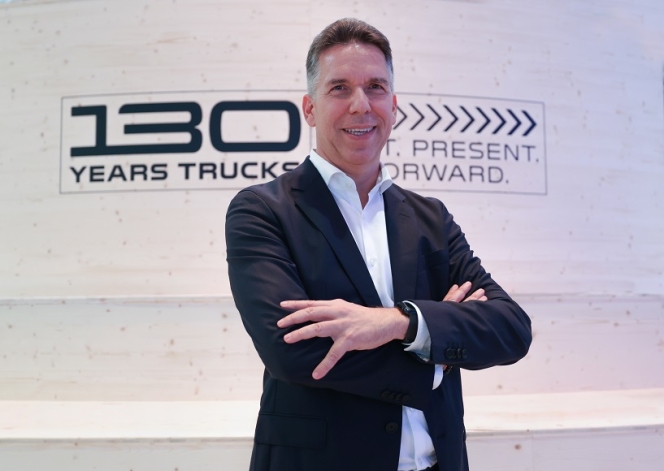
Daimler India Commercial Vehicles (DICV) has reaffirmed India's strategic value within Daimler Truck after the formation of the ISEAA customer region for the Mercedes-Benz Trucks segment. The company also outlined BharatBenz's next growth phase, driven by product innovation, customer ecosystem expansion and continued investment.
The Mercedes-Benz Trucks segment houses two brands: Mercedes-Benz Trucks and BharatBenz. DICV serves Indian customers under BharatBenz, while the Mercedes-Benz Trucks brand caters to South-East Asia, Australia-Pacific and other markets. Under a new operating model, the segment is divided into Europe, LAMEA, China and ISEAA regions. ISEAA unites previously separate markets under one customer-focused structure.
DICV anchors the ISEAA region, placing India at the centre of a framework spanning India, South-East Asia and Australia-Pacific. This reflects DICV's growing role as a manufacturing, engineering and export hub. Since operations began, DICV has exported over 75,000 trucks and buses and more than 330 million parts to over 70 markets, and supplies medium-duty transmissions from Chennai to Daimler Truck plants in Germany. Covering 42 countries and nearly 2.8 billion people, ISEAA offers substantial long-term growth, with commercial vehicle demand expected to rise over 5 percent annually.
DICV is accelerating BharatBenz's transformation, targeting safer, more productive transport solutions. With India's safety norms evolving, BharatBenz is readying its portfolio with Advanced Driver Assistance Systems calibrated for Indian conditions. Building on HX and Torqshift launches in construction and mining, BharatBenz continues bringing globally proven Daimler Truck technologies to India. Torqshift Automated Manual Transmission, proven worldwide and adapted for Indian duty cycles, improves driver comfort, reduces fatigue and lowers Total Cost of Ownership.
DICV keeps investing in a customer ecosystem maximising uptime and lifecycle value. BharatBenz's TruckConnect digital fleet management solution enables performance monitoring and data-driven insights. The BharatBenz Rakshana programme now services over 98 percent of vehicles within 48 hours. DICV plans to expand its service network from 430 touchpoints to 600 by 2030, focusing on northern, eastern and north-eastern India.
India's expanded role is backed by continued investment in local manufacturing, engineering and technology. These build on DICV's recently announced additional investment of approximately INR 40 billion in Tamil Nadu under a non-binding facilitation MoU with the state government. This takes DICV's cumulative investment in India beyond INR 145 billion. DICV operates with 92percent localisation and is supported by more than 400 local suppliers, strengthening its ability to develop products for Indian and global markets.
Torsten Schmidt, CEO & Managing Director, Daimler India Commercial Vehicles and President Mercedes-Benz Trucks Customer Region ISEAA, said, "India has long been an important market for Daimler Truck and the home of BharatBenz. Through the new ISEAA customer region, we are bringing India, South-East Asia and Australia-Pacific closer together to strengthen collaboration, share capabilities and respond faster to customer needs across these markets. DICV serves as the anchor entity for the region, building on its established strengths in manufacturing, engineering and exports. For our customers in India, BharatBenz remains focused on delivering products and services designed specifically for local operating conditions, while benefiting from the scale, expertise and collaboration of the broader Mercedes-Benz Trucks segment.”
Comments (0)
ADD COMMENT