

Prime Minister Narendra Modi Urges To Cut Down On Petrol, Diesel Usage
- By MT Bureau
- May 11, 2026
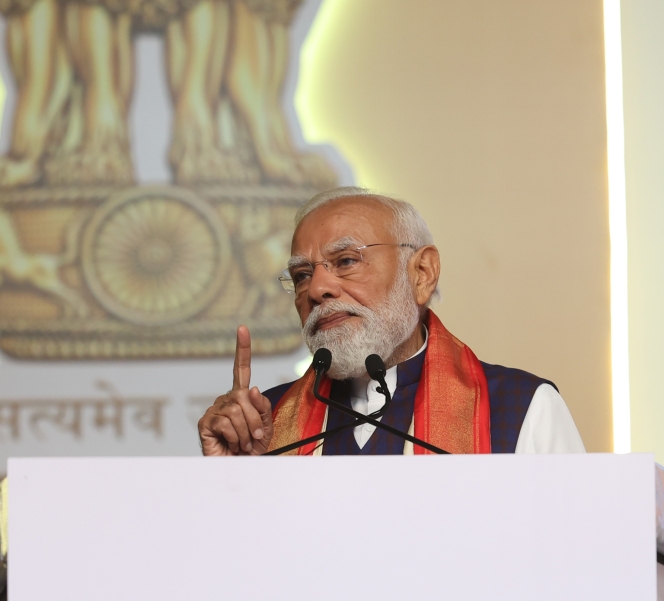
Prime Minister Narendra Modi outlined a transformative vision for India’s automotive and energy landscape, urging a strategic pivot toward alternative fuels and improved logistics to shield the economy from global volatility.
The Prime Minister was addressing a significant gathering in Telangana on Sunday, speaking against the backdrop of the ongoing West Asia energy crisis.
He emphasised that India’s automotive sector is central to navigating current geopolitical headwinds and highlighted the ‘unprecedented progress’ in ethanol blending, positioning it as a cornerstone of India’s sequential energy diversification strategy.
The Prime Minister detailed the government’s evolution in fuel management, noting that the initial push for universal LPG coverage has paved the way for a more sophisticated energy mix.
The government is aggressively promoting CNG-based transport systems nationwide to provide a cleaner, cost-effective alternative to traditional liquid fuels.
"The need of the hour is to use petrol, gas, and diesel with great restraint," Modi asserted, framing energy conservation as a matter of national security. He noted that judicious consumption is essential to ‘save foreign currency and reduce the adverse effects of war crises.’
On the infrastructure front, the Prime Minister underscored the massive INR 1,750 billion allocation toward National Highway development. This 12-year investment trajectory has yielded significant results for the automotive and logistics sectors, particularly in southern India.
- Stellantis
- Tata Motors Passenger Vehicles
- Tata Passenger Electric Mobility
- Fiat India Automobiles
- Shailesh Chandra
- Tianshu Xin
Stellantis, Tata Motors Broaden Partnership For Advanced Vehicle Technology And Product Development
- By MT Bureau
- October 12, 2026
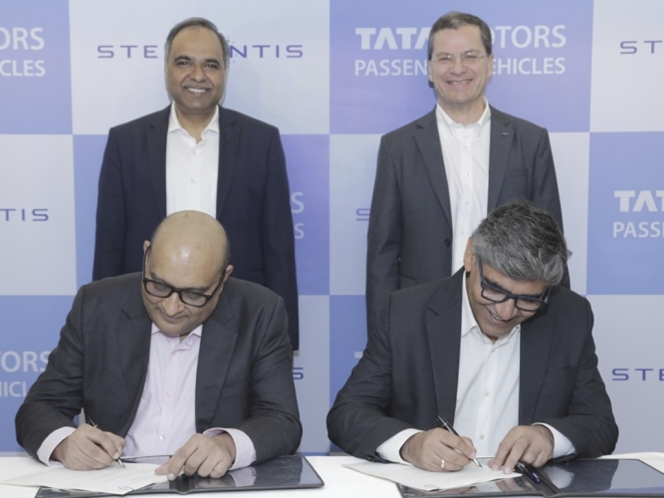
Stellantis India, Tata Motors Passenger Vehicles and Tata Passenger Electric Mobility have signed a definitive agreement expanding their long-standing partnership into vehicle technology and product architecture collaboration. The agreement builds on a Memorandum of Understanding signed in February 2026.
As per the terms, Tata Motors Passenger Vehicles will grant Stellantis access to its vehicle architectures and technology platforms. Stellantis will utilise its engineering resources in India to adapt these architectures for more than 50 international markets. Vehicles developed through the collaboration will be manufactured in India at Fiat India Automobiles, the 50:50 joint venture facility between Tata Motors and Stellantis located in Ranjangaon.
Shailesh Chandra, MD and CEO, Tata Motors Passenger Vehicles, said, "Our partnership with Stellantis has grown steadily over more than two decades, built on mutual trust and complementary strengths. This Agreement marks an important next step, extending our relationship into advanced vehicle technology and architecture, reflecting the strength and competitiveness of TMPV’s capabilities in these areas. We are delighted that Stellantis will leverage them to develop products for global markets. Together, we have an exciting opportunity to combine our respective strengths to create compelling vehicles engineered and made in India for customers in India and around the world."
Tianshu Xin, COO for Stellantis Asia-Pacific Region, said, "Partnerships are central to how Stellantis creates value across Asia-Pacific. By combining Tata Motors' strong capabilities in India with Stellantis' global product development and market reach, this Agreement will help us develop competitive vehicles in India and expand our export potential across international markets. It also reinforces India's growing role as a strategic manufacturing and development hub for Stellantis."
The agreement reinforces India's positioning as an engineering, product development and manufacturing export hub for both multi-national automotive corporations, integrating local supply chain scale with international market distribution networks.
TIP Group Earns Spot On Fortune 100 Best Companies To Work For In Europe
- By MT Bureau
- October 10, 2026
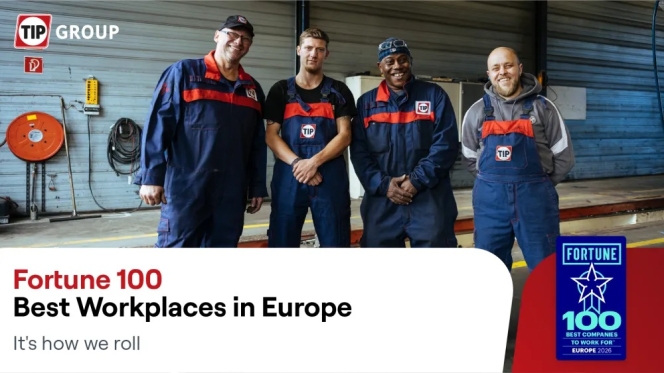
TIP Group has been named one of the Fortune 100 Best Companies to Work For in Europe. The list, produced by Great Place to Work, draws on employee feedback gathered through the Trust Index survey, so it mirrors workers’ own experiences on the job rather than external assessments.
This honour represents the newest step in TIP’s broader Great Place to Work journey, which has brought employer recognition across Europe for several years. The company’s workplace culture rests on three core values: team spirit, integrity and reliability and people. These principles guide how colleagues collaborate, serve customers and fuel success across the region.
TIP earned Great Place to Work certification in all nine countries surveyed in 2023 and has since extended it to 11 European nations. TIP France was recognised among France’s Best Workplaces for companies with 250 to 1,000 employees in March 2026, while TIP UK was named a Best Workplace in Manufacturing, Production & Transportation in September 2026. Rooted in employee experience, these honours reflect a culture of collaboration, trust and mutual support. As TIP expands across Europe, it stays committed to investing in its people and fostering an environment where careers grow and success is shared.
Arjen Kraaij, CEO, TIP Group, said, “This recognition reflects our people and the culture they create every day. It is especially meaningful because it is based on the experiences and feedback of our employees. Their teamwork, dedication and willingness to support one another are what make TIP special. I would like to thank all colleagues across Europe for helping build the company we are today.”
- Good Business Lab
- Suman Mishra
- Mahindra Last Mile Mobility
- Viveka Bhandari
- Padmini VNA Mechatronics
- Sunil Arora
- Abilities India Pistons & Rings
- Satyaprakash Patil
- Honda Motorcycle & Scooter India
- Vinkesh Gulati
- Automotive Skills Development Council
- Asahi India Glass
- Sansera Engineering
- Nirmal Deshpande
Automotive Leaders And Shopfloor Workers Convene In New Delhi To Address Gender Inclusion
- By MT Bureau
- October 09, 2026
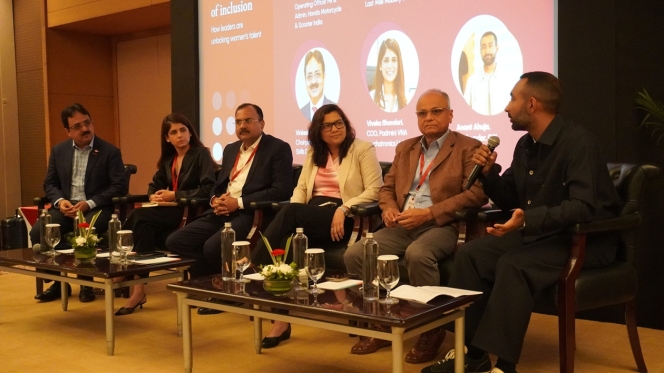
Good Business Lab brought together senior automotive executives, industry actors and shopfloor workers at a leadership conference in New Delhi to discuss strategies for increasing female workforce participation across India's automotive manufacturing sector.
The event followed the organisation's September research report, which revealed that women account for 8.7 percent of the combined original equipment manufacturer and component manufacturing workforce across the country.
The conference addressed findings from a three-year study by Good Business Lab spanning over 55 automotive firms, 400 stakeholders and 1,900 individuals. Discussions focused on practical shopfloor interventions to improve recruitment and retention, including talent supply chains, night-shift operational frameworks, last-mile transportation solutions and childcare infrastructure.
Industry panels examined career progression pathways, performance metrics for middle management retention, and workplace safety conditions required to support long-term employment.
The event featured three panel sessions covering business metrics, worker perspectives, and sector-wide operational scalability. Executives participating in the discussions included Suman Mishra, Chief Executive Officer and Managing Director of Mahindra Last Mile Mobility; Viveka Bhandari, Chief Operating Officer of Padmini VNA Mechatronics; Sunil Arora, Managing Director of Abilities India Pistons & Rings; Satyaprakash Patil, Chief Human Resources Officer of Honda Motorcycle & Scooter India; and Vinkesh Gulati, Chairperson of the Automotive Skills Development Council.
A panel of female shopfloor associates from Abilities India Pistons & Rings, Asahi India Glass, Honda Motorcycle & Scooter India and Sansera Engineering detailed their career trajectories and operational experiences in vehicle assembly and component production.
Nirmal Deshpande, Managing Director of Good Business Lab, said, “The evidence increasingly mirrors what we are hearing from industry: women’s participation is no longer just an inclusion imperative, but a business necessity. Several leading firms are already showing what is possible; the challenge now is scale. We brought business leaders, women workers and the wider ecosystem together to chart the path ahead. The opportunity is clear: now we need to turn what works into action across the sector.”
Good Business Lab plans to collaborate with automotive manufacturers, philanthropic organisations and industry bodies to pilot shopfloor solutions and co-design workforce frameworks across the manufacturing sector.
- JSW MG Motor India
- MG Developer Program
- Nayan Technologies
- Technod8.AI
- LiveNSense
- LW3
- Smaartbrand by Acquink Solutions
- Fitsol
- Cautio
- Meta Materials Circular Market
- Anurag Mehrotra
- DPIIT
- Startup India
- JSW
- NCPI BHIM
- Jio
- Gulf Oil India
- TiE Delhi NCR
- iCreate
- Allianz Partners India
- TERI
- BSES Rajdhani Power Limited
- LICO Materials
- Pulse Energy
JSW MG Motor India Announces Winners Of 6th Edition Of MG Developer Program
- By MT Bureau
- October 09, 2026
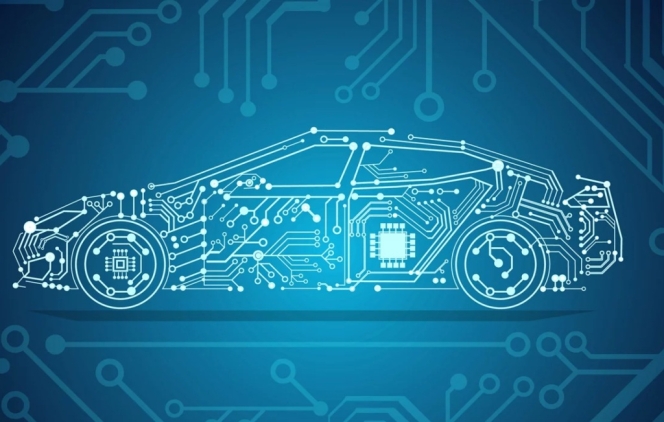
JSW MG Motor India, one of the leading passenger vehicle manufacturers, has announced the eight winning startups selected for the 6th edition of the MG Developer Program.
The startup engagement initiative, centred on the theme 'Innovation in Automotive', evaluated over 130 applications before selecting the finalists for pilot deployment consideration.
The selected startups comprise Nayan Technologies, Technod8.AI, LiveNSense, LW3, Smaartbrand by Acquink Solutions, Fitsol, Cautio and Meta Materials Circular Market.
The chosen entities specialise in artificial intelligence (AI) platforms, industrial software, battery supply chain tracking, mobility intelligence, supply chain decarbonisation and automotive circular economy systems.
The winners will collaborate with the vehicle manufacturer and program partners to test and implement pilot projects across industrial operations, manufacturing, customer experience and mobility services.
Anurag Mehrotra, Managing Director, JSW MG Motor India, said, "We are entering an era where the boundaries between mobility, data, and artificial intelligence are rapidly converging. The next wave of transformation in the automotive industry will be driven by innovators who can connect these ecosystems and create solutions with real-world impact. Through the MG Developer Program, we are committed to providing startups with a platform to collaborate, experiment and scale breakthrough ideas. The winning startups of Season 6.0 represent some of the most promising innovations across automotive technology, sustainability, industrial intelligence, and mobility services. We look forward to partnering with them to explore pilot deployments and unlock new possibilities for the future of mobility."
The sixth season was conducted in partnership with DPIIT, Startup India, JSW, NCPI BHIM, Jio, Gulf Oil India, TiE Delhi NCR, iCreate, Allianz Partners India, TERI, BSES Rajdhani Power Limited, LICO Materials and Pulse Energy.
The program saw more than 40 startups shortlisted for presentations, with 18 reaching the final jury stage. Since its launch in 2019, the program has evaluated over 1,680 startup applications covering connected vehicles, electric mobility, artificial intelligence, and manufacturing technologies.
Comments (0)
ADD COMMENT