

TKM And Maharashtra Government Forge Ahead With Major ITI Skilling Initiative
- By MT Bureau
- March 05, 2026
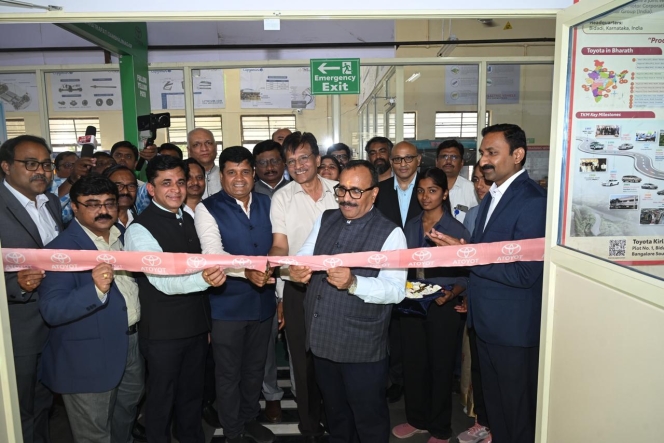
Toyota Kirloskar Motor (TKM) has taken a significant step in its ongoing collaboration with the Government of Maharashtra by completing the upgrade of the Government ITI Deogiri in Chhatrapati Sambhajinagar. This development is part of a broader Memorandum of Understanding aimed at enhancing the state’s network of Industrial Training Institutes. The company has already facilitated the modernisation of 16 ITIs across the Marathwada and Nagpur divisions. The core objective of this partnership is to uplift rural youth by providing them with advanced technical training, thereby preparing them to become skilled technicians ready to support India’s expanding industrial sector.
A structured three-pillar strategy has been established to drive this transformation. The first pillar concentrates on educator development through specialised training programmes and workshops, including sessions held at Toyota’s facility in Bidadi. The second involves equipping the institutes with modern tools and learning materials, such as fundamental skill training kits and visual aids, to create an industry-relevant learning environment. The third pillar is dedicated to instilling a strong work culture by integrating practices that promote discipline, safety and environmental awareness. This holistic approach aims to cultivate graduates who not only possess technical expertise but also demonstrate integrity and a sense of social responsibility.
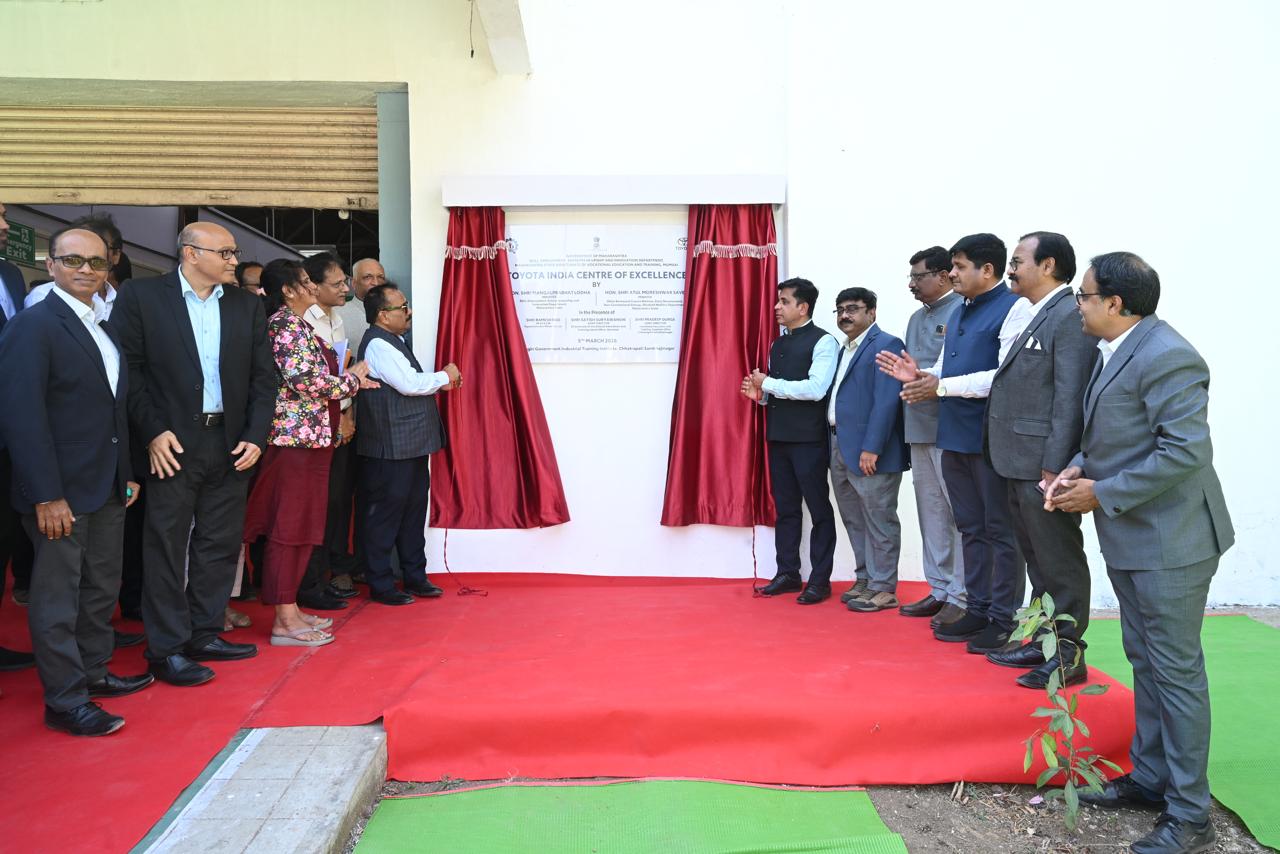
The rollout is planned in three distinct phases. Following the completion of the first phase covering 17 ITIs in the Marathwada and Nagpur regions, the subsequent phases will extend the initiative to the Amravati and Nashik divisions and finally to the Mumbai and Pune divisions by 2030. With the upgrade of ITI Deogiri, the institution now serves as a blueprint for this scalable skilling framework. Starting this academic year, it will begin offering training in both manufacturing and service domains to align with current industry demands. This long-term project, which ultimately aims to uplift 45 ITIs across the state, reinforces the national Skill India Mission by leveraging global manufacturing insights to address local skill development needs.
Mangal Prabhat Lodha, Minister of Skill, Employment, Entrepreneurship & Innovation, Government of Maharashtra, said, “Our youth are the foundation of Maharashtra’s future, and by nurturing their skills and aspirations, we are building a self-reliant society. This collaboration with TKM reflects our commitment to providing young people with industry-relevant training that enhances their confidence, employability and contribution to nation-building. Such initiatives ensure that our students are ready for the future to drive the country's growth story."
Vikram Gulati, Executive Vice President – Corporate Affairs and Governance, Toyota Kirloskar Motor, said, “At Toyota Kirloskar Motor, we firmly believe that the youth in rural India deserve the same opportunities as those in urban centres. Our vision is to empower them with world‑class technical capabilities so they can excel in their careers and contribute meaningfully to the nation’s progress. Guided by our philosophy of ‘Grow India, Grow with India’ and our mission of ‘Producing Happiness for All’, this initiative underscores our commitment to strengthening skilling at the grassroots level. As India moves towards the vision of Viksit Bharat 2047, we are dedicated to enabling equitable access to industry‑relevant skills that uplift communities and build a more resilient future.”
- Larsen & Toubro
- L&T
- TuTr Hyperloop
- IIT Madras
- S V Desai
- Prof. Satya Chakravarthy
- Dr Aravind S Bharadwaj
L&T Inks Agreement With TuTr Hyperloop To Develop Next-Generation Mobility Systems
- By MT Bureau
- October 14, 2026
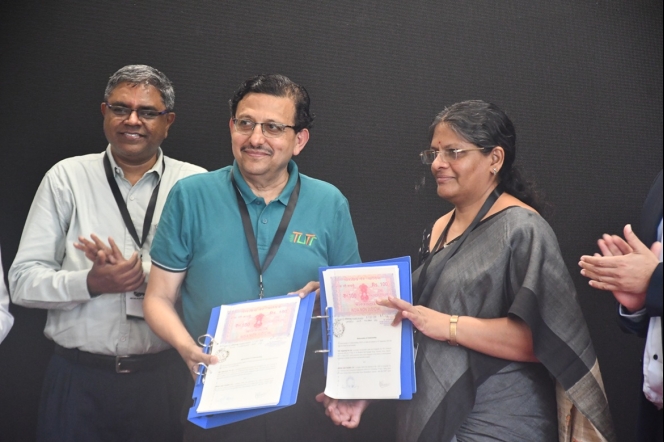
Larsen & Toubro (L&T) has signed a Memorandum of Understanding with TuTr Hyperloop, an IIT Madras-incubated deep-tech startup, to develop and deploy next-generation mobility infrastructure in India.
The agreement creates a framework for L&T and TuTr Hyperloop to collaborate on Linear Induction Motor-based propulsion systems, vacuum tube structures, pressure management systems, civil engineering works, electrical infrastructure, signalling and telecommunications integration.
Project-specific agreements will follow to define execution terms across freight logistics, port connectivity and industrial transit applications. The technical roadmap aims to progress from linear induction systems toward magnetic levitation and vacuum-based transportation networks.
The partnership combines L&T's engineering, procurement and construction capabilities with TuTr Hyperloop's electromagnetic propulsion research to assess commercial viability, conduct technical feasibility studies and engage prospective customers for hyperloop transit projects in India.
S V Desai, Whole-Time Director and Senior Executive VP of Infrastructure, L&T, said, "Hyperloop represents an exciting frontier in next-generation mobility, with the potential to redefine the movement of people and goods. Its innovative propulsion technology and low-friction environment enable faster transit, improved logistics efficiency, reduced energy consumption and lower emissions. Translating such technological innovation into practical deployment requires robust engineering, scalable infrastructure and close collaboration across the ecosystem. Our partnership with TuTr Hyperloop is a step in that direction."
Prof. Satya Chakravarthy, Professor, IIT Madras, said, "The transition of advanced mobility technologies from research and development to real-world deployment requires strong collaboration between academia, technology developers and industry. This partnership between TuTr Hyperloop and L&T brings together complementary strengths that can help address the engineering and infrastructure challenges involved in scaling next-generation transportation systems. It is an encouraging step towards translating indigenous innovation into practical, deployable solutions for India."
Dr Aravind S Bharadwaj, Co-Founder and CEO, TuTr Hyperloop, said, "At TuTr Hyperloop, our focus is on developing indigenous mobility technologies that can address real-world transportation and logistics challenges. Our collaboration with L&T brings together our capabilities in electromagnetic propulsion, advanced mobility systems and technology development with L&T’s extensive engineering and infrastructure execution expertise. Together, we aim to work on commercialisation these technologies."
Axalta Names Redefined As 2027 Global Automotive Colour Of The Year
- By MT Bureau
- October 14, 2026
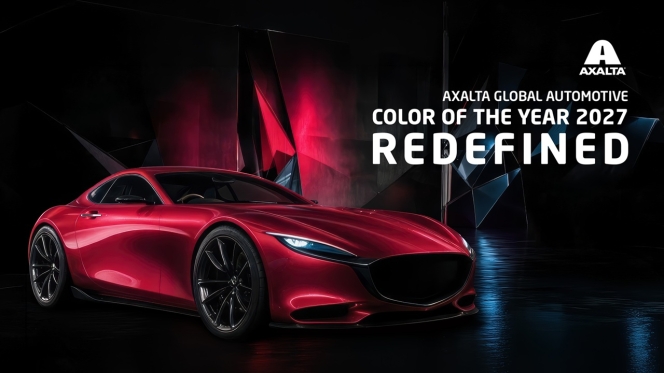
Coatings manufacturer Axalta Coating Systems has introduced Redefined, a ruby-red finish, as its 2027 Global Automotive Colour of the Year during the Automechanika exhibition in Frankfurt.
The finish incorporates pigment and effect technology designed to create depth and light reflection across vehicle body panels. Redefined marks an evolution of the red hue introduced with Radiant Red, Axalta's initial Colour of the Year selection 13 years ago. The development reflects market research into consumer preferences for vehicle personalisation and colour depth across global automotive markets.
Axalta's colour formulation teams utilise market trends and coating science to develop manufacturable formulations for global original equipment manufacturers and refinish networks. The 2027 selection is structured for application across multiple vehicle segments and production lines.
Matthew Boland, Vice-President of Global Refinish Technology, Axalta, said, "Redefined represents where we see automotive colour going, expressive and individual, but still refined and timeless. The deepness of the ruby tone combined with its luminosity and depth creates a colour that comes alive with the vehicle. It's a great example of how we can take a familiar colour and use the art and science of coatings to give it an entirely new perspective."
Hyundai Motor Group To Invest $15.5 Billion In India By 2032
- By MT Bureau
- October 13, 2026
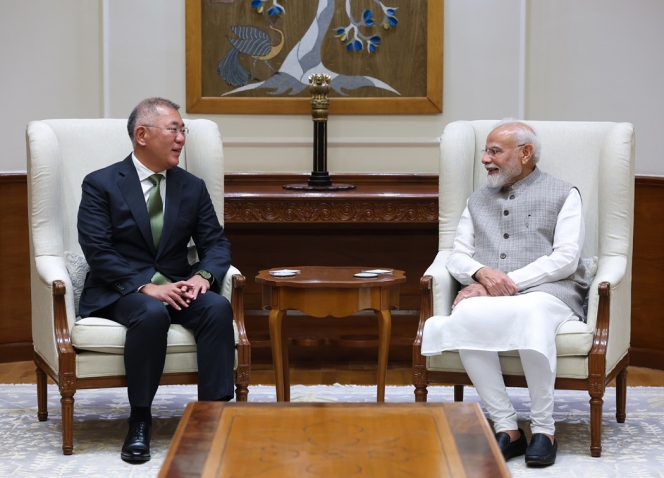
South Korean automotive major Hyundai Motor Group has announced a USD 15.5 billion investment plan for India from 2026 through 2032. The strategy was outlined during a meeting between Indian Prime Minister Narendra Modi and Hyundai Motor Group Executive Chair Euisun Chung at the Prime Minister’s Office in New Delhi.
To execute the 7-year plan, Hyundai Motor Group will establish a dedicated investment entity in India to manage capital allocation across manufacturing expansion, research and development, supply chain localisation and mobility services.
The investment includes an allocation of approximately USD 700 million to expand the Group's Indian R&D centre and build a vehicle testing track facility. Manufacturing expansion will focus on scaling production capacity across Hyundai Motor India and Kia India to support domestic sales and export operations.
At present, the Group maintains an annual production capacity exceeding 1.4 million vehicles in India across Hyundai facilities in Chennai (824,000 units) and Pune (170,000 units), alongside Kia India's Anantapur plant (431,000 units).
The investment strategy also targets local component sourcing, electric vehicle charging infrastructure, specialised vehicle financing, end-of-life vehicle recycling and startup investments across India's automotive sector.
"India remains one of Hyundai Motor Group’s most important and strategic markets globally. The past 30 years have been defined by our commitment to India. This investment reaffirms our commitment to India for the next 30 years and beyond. Through this investment, we will create more employment opportunities and work together with our partners and stakeholders to support India’s continued industrial development," said Chung.
- GreenCell Mobility
- Eversource Capital
- Impact Fund Denmark
- International Finance Corporation
- British International Investment
- Tata Capital
- Devndra Chawla
- Dhanpal Jhaveri
- Lars Bo Bertram
GreenCell Mobility Secures INR 3.3 Billion Investment From Impact Fund Denmark
- By MT Bureau
- October 13, 2026
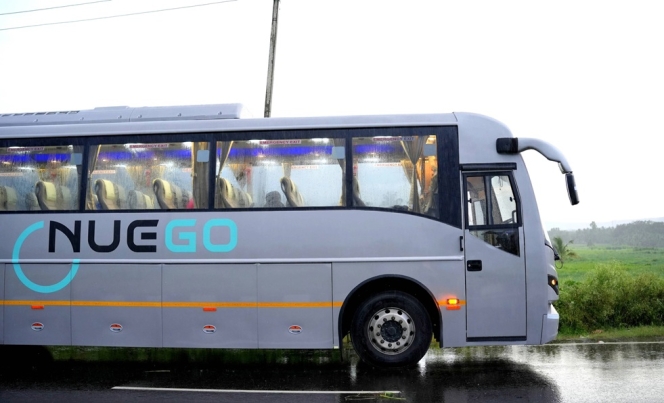
Electric bus operator GreenCell Mobility, a portfolio company of Eversource Capital, has secured an equity investment of INR 3.3 billion from Impact Fund Denmark. The capital will support the deployment of approximately 4,500 electric buses, bringing GreenCell's total fleet to over 5,000 e-buses across 105 cities in India.
The funding supports GreenCell Mobility's expanding order book across intra-city municipal transport and intercity routes. The platform operates as an original equipment manufacturer-agnostic operator, managing bus procurement, depot charging infrastructure and fleet maintenance contracts under public-private partnerships and private operations.
The investment joins existing institutional backers of GreenCell, including the International Finance Corporation, British International Investment and Tata Capital, as the company expands its operational footprint across urban transport corridors in India.
Dhanpal Jhaveri, CEO, Eversource Capital, said, "Electric public mobility is moving from an emerging opportunity to an investable infrastructure asset class in India. GreenCell was created with that conviction – to build the operating capabilities and institutional scale needed to build an enduring business. The equity investment from IFD demonstrates the depth of long-term institutional capital now backing GreenCell Mobility. The next phase is about putting that capital to work with discipline – expanding the business, deepening its capabilities and creating long-term value as India transitions to electric mobility."
Devndra Chawla, MD and CEO, GreenCell Mobility, said, "We welcome IFD as a shareholder and value the continued confidence of Eversource, IFC, BII and Tata Capital as we take GreenCell forward. We have established a strong presence across both intra-city and intercity transportation, with the operating experience to manage increasingly large and complex deployment. Our focus is on executing our order book with rigour, strengthening service delivery and ensuring that the organisation keeps pace with the size and complexity of our operations. This equity investment gives us greater headroom to accelerate our plans while maintaining the standards of reliability, efficiency and customer experience that are fundamental to our business."
Lars Bo Bertram, CEO of Impact Fund Denmark, said, "India is a central market for Impact Fund Denmark. GreenCell is a strong investment opportunity in a rapidly growing market, while also addressing one of India’s major challenges air pollution. Scaling electric transportation can contribute to cleaner cities and accelerate India’s green transition."
Comments (0)
ADD COMMENT