

BMW Group India Reports Record Q1 Sales With 17% Growth In CY2026
- By MT Bureau
- April 08, 2026

German luxury brand BMW Group India has recorded its highest-ever Q1 sales, delivering 4,567 cars in the first three months of CY2026. This represents a 17 percent YoY increase, with every month in the quarter achieving record performance levels.
The Group maintains a 70 percent market share in the Indian luxury electric vehicle (EV) segment. In Q1, the company sold 1,185 BMW and MINI EVs, marking an 83 percent YoY growth. Currently, 1 in 4 vehicles sold by BMW in India is an electric model, with EV penetration reaching 26 percent of total sales.
The company’s electric portfolio includes 6 cars and 2 scooters, supported by a network of over 6,000 charging points nationwide. Initiatives such as Destination Charging and Smart E-Routing have been implemented to support the transition to luxury electric mobility.
As per the luxury brand, it observed growth across several specific vehicle categories:
- Long Wheelbase (LWB) Range: LWB models accounted for over 50 percent of total sales, with 2,256 units delivered, which marks 23 percent YoY increase.
- Sports Activity Vehicles (SAV) segment grew by 38 percent YoY, totalling 2,966 units and representing 65 percent of the group's car sales.
- MINI: The brand delivered 213 units, achieving 42 percent growth.
- BMW Motorrad: The motorcycle division delivered 1,216 units, led by demand for the G 310, S 1000 and GS series.
BMW Group India has planned 27 product launches for 2026, covering all-new models, facelifts and limited editions. Four models were introduced in Q1, including the BMW M2 CS and BMW X3 30, with a further eight launches scheduled for the second quarter.
Under its Retail.NEXT strategy, the group plans to expand its presence by adding 19 outlets across 18 cities this year. The current network comprises 97 touchpoints in 40 cities. Additionally, BMW India Financial Services financed 25 percent of the vehicles sold in Q1, offering products with assured buy-back values of up to 74 percent.
Hardeep Singh Brar, President and CEO, BMW Group India, said, “BMW Group India has entered 2026 in an extremely strong position. We have achieved our highest-ever Q1 sales, registering solid double-digit growth, despite macroeconomic and geopolitical headwinds. Our lead in India’s luxury electric mobility also continues thanks to the immense trust our valued customers have put in our electric offerings in terms of performance, EV ecosystem and technology. We are geared to a pulsating 2026 that will be marked by our most ambitious product offensive, with 4 already launched and 23 more to go. Sustaining this momentum into long-term success, our unwavering focus on customer experience, aftersales and brand connect will be taken to the next level. With each new car, we aim to deliver JOY to our customers who enable this success story for BMW Group India.”
- FORVIA
- Anand Group
- Gabriel India
- Faurecia ANand Seating India
- Jaisal Singh
- Anjali Singh
- Martin Fischer
FORVIA, Anand Group Form JV For Automotive Seating In India
- By MT Bureau
- October 07, 2026
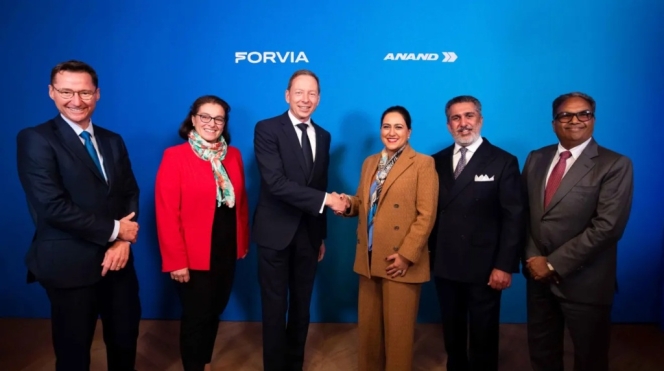
Automotive tier 1 suppliers FORVIA and Anand Group have established a new joint venture to manufacture seat frames and complete seats for the Indian automotive market.
The new entity, named Faurecia Anand Seating India, will be controlled by FORVIA with a 50 percent plus one share stake, while Gabriel India, Anand Group’s flagship listed firm, will hold 50 percent less one share.
The partnership aims to combine FORVIA’s seating technologies and engineering portfolio with Anand Group’s operational network and customer relationships with domestic automotive manufacturers.
The JV aims for a 10 percent market share in India over the next five years as part of its regional expansion strategy. The collaboration expands on an existing relationship between the two companies that began in 1991 in the clean mobility segment.
The joint venture will utilise localised manufacturing footprints to support supply chain, industrial and talent capabilities for supply contracts across Indian vehicle manufacturers.
Jaisal Singh, Vice-Chairman, Anand Group, said, "This partnership is a natural extension of Gabriel India’s transformation into a broader mobility solutions enterprise. As vehicle systems become more integrated and technology-intensive, the ability to participate across a wider spectrum of the automotive value chain assumes strategic importance. The venture strengthens our portfolio with a globally proven capability, while reinforcing our commitment to building scalable, technology-led businesses that create enduring value."
Anjali Singh, Executive Chairperson, Anand Group and Gabriel India, said, "At Anand, we have always believed that long-term relevance is built through thoughtful partnerships, technological excellence, and a deep understanding of customer needs. This venture strengthens our longstanding partnership with FORVIA, building on complementary strengths and a shared commitment to innovation. By bringing together FORVIA’s global expertise and Gabriel India’s strong market presence, it creates a platform that is both strategically significant and future-ready."
Martin Fischer, CEO, FORVIA, said, "When we unveiled our IGNITE strategy earlier this year, we highlighted India as a key growth driver for FORVIA. Following the award of our first complete-seat program a few months ago, today’s agreement marks another important milestone in our development in the country. Building on our long-standing relationship with Anand Group, the joint venture will help accelerate FORVIA Seating’s growth in India."
Faiz Ahmad Succeeds Kumar Prabhas As New CEO Of Hinduja Tech
- By MT Bureau
- October 06, 2026
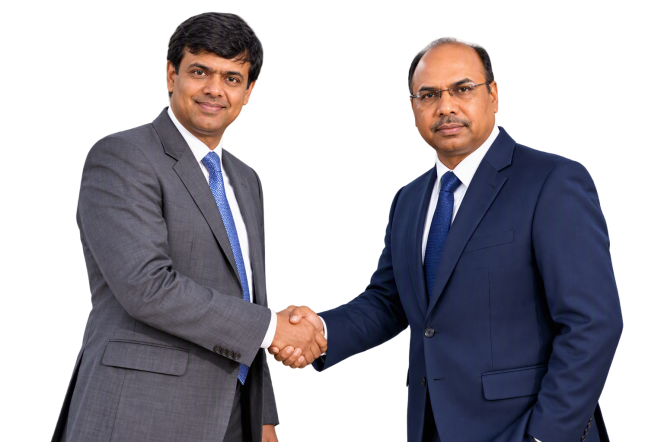
Hinduja Tech, the mobility-focused engineering and R&D technology subsidiary of Ashok Leyland, has announced the appointment of Faiz Ahmad as Chief Executive Officer, effective 1 November 2026.
The appointment follows the retirement of current Chief Executive Officer Kumar Prabhas, who concludes nine years in the role on 31 October 2026.
Ahmad has been part of the Hinduja Group ecosystem for nearly two decades and currently serves as Chief Operating Officer and Head of Vehicle Engineering & Development. During his tenure with the company, he has overseen operational functions, capability building and vehicle development units. Prabhas and Ahmad will execute a transition process throughout October.
During his nine years leading Hinduja Tech, Prabhas managed the company's international expansion, service portfolio diversification and the acquisitions of engineering firms DSD and Tecosim.
Dheeraj G. Hinduja said, “I would like to express my sincere appreciation to Kumar Prabhas for his dedicated leadership and valuable contribution to Hinduja Tech over the past nine years. His vision, commitment, and leadership have been instrumental in shaping the company's growth journey and building a strong foundation for the future. We thank him for his invaluable service and wish him a joyful, healthy, and fulfilling retirement."
"Faiz has been an integral part of our journey and embodies the values, customer focus, and innovative spirit that define Hinduja Tech. His deep industry knowledge, strategic perspective, and proven leadership capabilities make him exceptionally well-positioned to lead the organization into its next phase of growth. We are confident that under his leadership, Hinduja Tech will continue to strengthen its market position, deepen customer relationships, and accelerate innovation across its global operations," added Hinduja.
Faiz Ahmad said, “I am honoured to be entrusted with the responsibility of leading Hinduja Tech at this exciting stage of its growth journey. We have a strong foundation, talented teams, trusted customer relationships, and significant opportunities ahead. I look forward to working closely with our employees, customers, and partners to build on our successes, drive innovation, and deliver sustainable value for all stakeholders.”
Prabhakar Atla Succeeds Balaji Viswanathan As New CEO Of ALTEN India
- By MT Bureau
- October 06, 2026
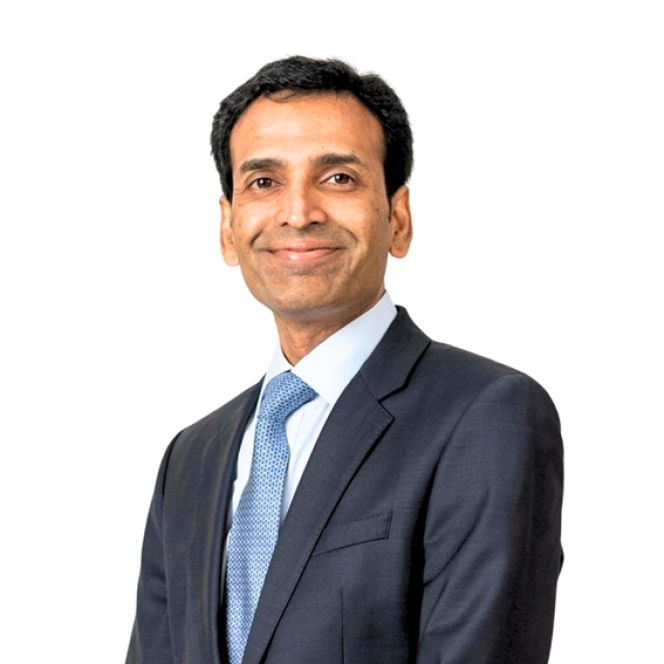
ALTEN India, a global engineering and technology consulting group, has appointed Prabhakar Atla as its new Chief Executive Officer, effective 5 October 2026. He previously served as President and Chief Operating Officer at Cyient, succeeds Balaji Viswanathan as head of the company's Indian operations.
Atla brings three decades of industry experience to the role, having led global operations and business units across sectors including aerospace, communications, rail, energy and semiconductors. His previous assignments include roles in Europe, India, the United States, Japan, and Australia, as well as serving as President and Chief Financial Officer at Cyient prior to his appointment as Chief Operating Officer.
Pascal Amore, Group EVP, Head of APAC, ALTEN, said, "Prabhakar's depth of experience in engineering, IT and technology services, and his track record of leading large global organisations through transformation, make him the right leader for ALTEN next chapter in India. India is core to the ambitions of our 2030 strategic plan, and I am confident Prabhakar will strengthen our organisation, develop new capabilities and accelerate our growth across the country."
Prabhakar Atla said, "I am honoured to join ALTEN and lead its talented teams in India. ALTEN India has grown into a strategic capability hub for the Group, with deep engineering expertise and trusted client relationships. My ambition is clear: enable and empower India as the engine of ALTEN Group's transformation, powered by deep sector expertise, AI-led engineering and faster innovation for our clients."
The company currently employs more than 8,500 personnel across 13 centres in eight Indian cities. The unit provides engineering, digital transformation, semiconductor and artificial intelligence solutions to clients in the automotive, aerospace, defence, telecommunications, consumer technology, manufacturing, and life sciences sectors.
- AIC Pinnacle
- National Automotive Test Tracks
- NATRAX
- EKA
- Dr Avinash Thakur
- Dr Manish Jaiswal
- Dr Sudhir Mehta
- startup
AIC Pinnacle Partners NATRAX To Support Automotive And EV Startups
- By MT Bureau
- October 06, 2026
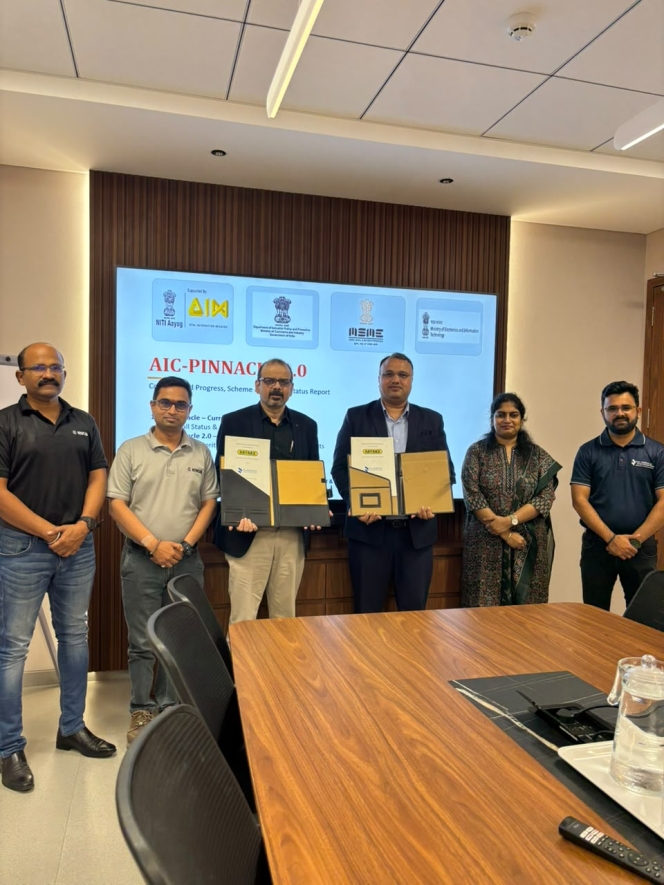
AIC Pinnacle Entrepreneurship Forum and the National Automotive Test Tracks (NATRAX) have signed a memorandum of understanding to support startups in the automotive, electric vehicle and connected mobility sectors.
The agreement was executed at EKA's vehicle manufacturing facility in Chakan by Dr Avinash Thakur, CEO, AIC Pinnacle and Dr Manish Jaiswal, Director, NATRAX.
The collaboration combines AIC Pinnacle’s business incubation and mentoring programs with the testing and certification infrastructure at NATRAX. The partnership aims to assist startups in progressing from prototypes to validated commercial products. Immediate initiatives include organising a startup hackathon and granting select cohort members access to the NATRAX testing tracks near Pithampur, Madhya Pradesh.
The signing event included representatives from EKA Mobility, AIC Pinnacle and NATRAX, such as EKA Mobility Chief Product Officer Zoeb Altafhussain Karampurwala, Chief Engineers Kaustubh Vasant Joshi and Pankaj Shivrudrappa Munoli, and R&D Team Lead Swapnil Anil Tambe, alongside AIC Pinnacle Senior Manager Shadab Hussain and NATRAX Group Lead Tulika Mazumdar.
"The partnership with NATRAX opens an important bridge between startups and the automotive testing and validation ecosystem. Our objective is to help promising innovations move beyond the incubation stage and gain access to the technical, industry and testing support required to develop market-ready solutions," said Dr. Thakur.
Dr Manish Jaiswal said the partnership would create opportunities for startups and innovators to access relevant testing, validation and ecosystem capabilities. "Such partnerships can contribute to accelerating the development and adoption of emerging mobility technologies," he said.
Dr Sudhir Mehta, Founder and Chairman, Pinnacle Industries and Group Companies, said, "Electric mobility will remain a key focus area for AIC Pinnacle in the coming period. This MoU strengthens that vision by giving startups direct access to the industry, strategic partners, academic institutions and government agencies they need to scale."
The initiative will establish networks between early-stage companies, industrial firms, academic institutions, and government agencies across Maharashtra and Madhya Pradesh. AIC Pinnacle operates as a non-profit incubator supported by NITI Aayog's Atal Innovation Mission, while NATRAX operates testing and certification facilities in Central India.


Comments (0)
ADD COMMENT